Prentisstown’s population decline
The Knife of Never Letting GoPrentisstown’s population decline records the gradual unmaking of a town that survived a wider catastrophe only to become increasingly isolated. Its dwindling numbers are not merely a statistic: deaths and disappearances leave fewer people in a community with no apparent future, while the Noise of those who remain presses on the boy counting them from the ridge.
The Town and Its Numbers
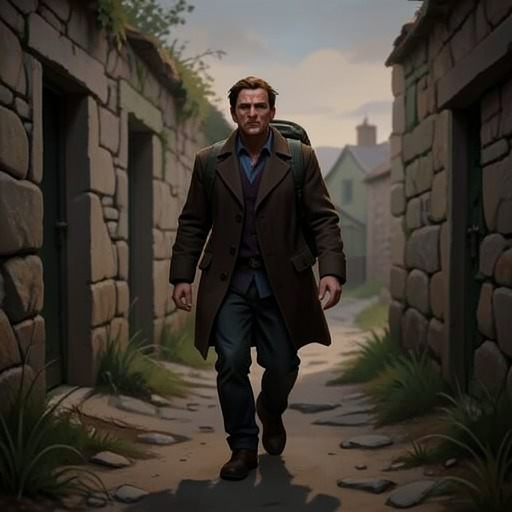
From the ridge above Prentisstown, the town is small and visibly diminished: its population is 147 and falling, consisting of 146 men and one boy who is not yet counted among the men. The arithmetic draws a sharp line between the adult population and the nearly adult Todd Hewitt, whose position at its edge makes the town’s shrinking scale impossible to mistake. The repeated insistence that the numbers keep falling gives the count a sense of ongoing loss rather than a static census.
That decline is set against the town’s physical limits. Prentisstown is described as what remains of a settlement with a short central road and only one of several former local services, while the surrounding farms include empty and ruined properties. The dwindling population thus belongs to a larger pattern of abandonment: the town itself is reduced, and its inhabitants are exposed to the emptiness around it.
Survival and Isolation
Ben recounts that other settlements once stood across the New World, with the ships arriving roughly ten years before Todd’s birth. In his account, the war with the Spackle and the release of germs wiped out those settlements and brought Prentisstown close to destruction as well. The town survived because of Mayor Prentiss’s military skill. That survival, however, did not restore a wider society: Prentisstown remains alone in a largely empty world, and its continued existence is bound to the same history that left it nearly wiped out.
The account gives the mayor’s role a stark double edge. His army skills are credited with keeping the town alive, yet the people who survive do so in a place described as having no future. Prentisstown’s survival is therefore not an escape from catastrophe so much as its aftermath: a remaining community whose numbers continue to diminish.
Deaths, Disappearances, and the Noise
The decline takes different forms. Mr Royal kills himself; Mr Gault, a former neighboring farmer, and Mr Michael, the town’s second-best carpenter, disappear; and Mr Van Wijk vanishes on the same day his son becomes a man. These losses have distinct circumstances, but together they make departure and death part of the town’s ordinary experience. The account connects them to the pressure of living in a single Noisy town with no future, where some men cannot bear to stay even though there is nowhere else to go.
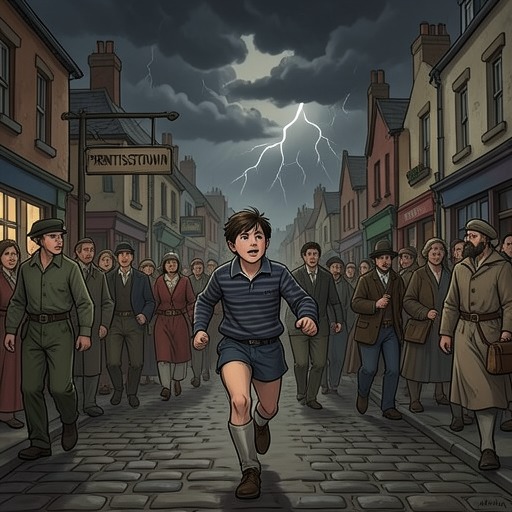
For Todd, the shrinking population is also a wall of sound. Looking up toward the town, he hears all 146 men at once, their Noise descending the hill like a flood. The sound carries voices and mental images, but it does not make truth simple: memories, fantasies, plans, and lies mingle, and thoughts can be obscured even when they are audible. The contrast is telling. Prentisstown’s people are intensely present in one another’s minds, yet their closeness offers no protection against isolation, disappearance, or death. The population count measures who remains; the Noise makes the weight of those remaining inescapable.